For many pet owners, feeding is no longer just about filling a bowl twice a day. Cats and dogs may have different meal schedules, portion needs, drinking habits, and daily routines. When owners travel, work long hours, or manage multiple pets at home, a reliable feeding system can make pet care easier and more consistent.
That is why the smart home pet feeder has become an important product category in modern pet care. It combines automatic feeding, intelligent control, and user-friendly design to help owners manage daily feeding with less stress. For brands, distributors, and smart pet product buyers, choosing the right feeder also means evaluating product stability, user experience, safety, and supplier capability.
A traditional pet bowl depends entirely on manual feeding. If the owner forgets, works late, or is away from home, the pet’s feeding schedule may be affected. A smart feeder is designed to solve this problem by offering more controlled and flexible feeding management.
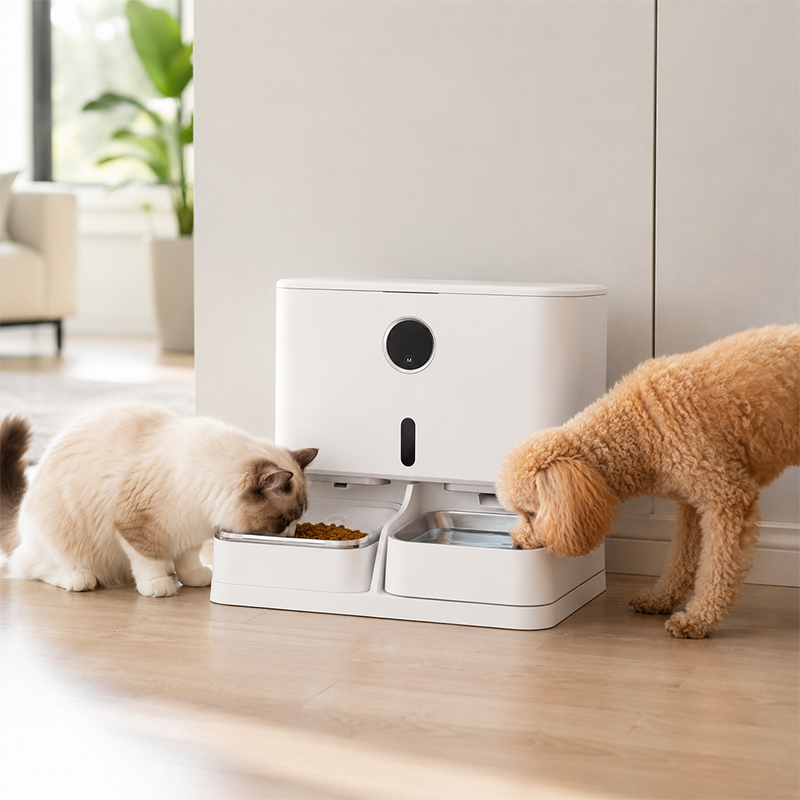
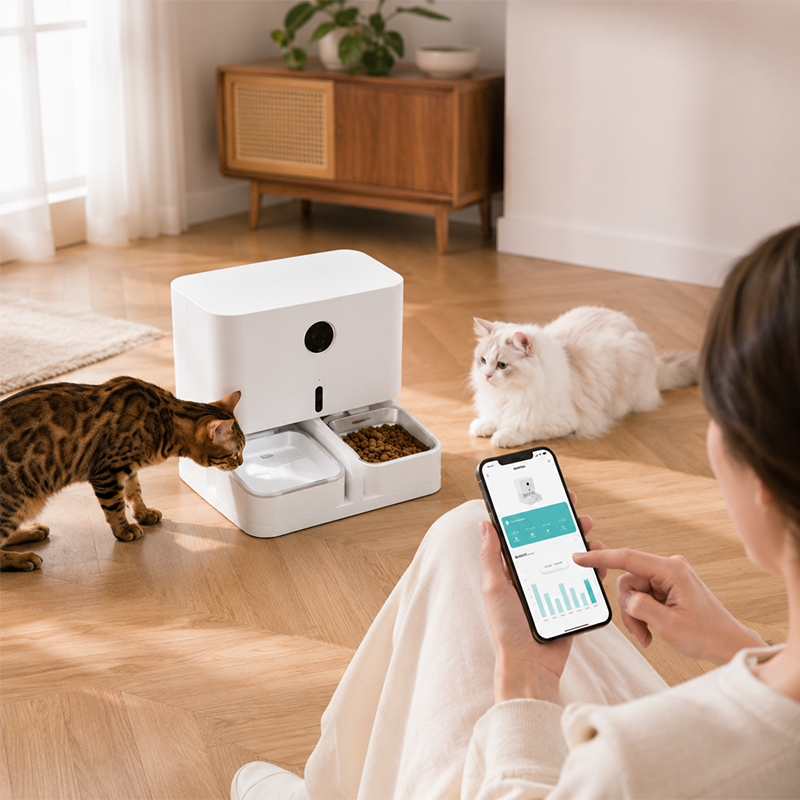
A smart pet feeder usually supports automatic meal dispensing, scheduled feeding, and remote control through an app. Some models may also combine feeding and drinking functions, making them more suitable for daily indoor pet care. For cats, this can help reduce irregular eating habits. For dogs, it can support more consistent portion management, especially for small and medium-sized breeds.
From a buyer’s perspective, the value is not only “automatic feeding.” A good smart feeder should help pet owners answer practical questions: Has my pet eaten? Is the food dispensing smoothly? Is the water clean? Can I control the device when I am not at home? These questions are closely connected to real user experience and product reviews.
When comparing smart pet feeders, buyers should avoid judging only by appearance or price. A feeder may look modern, but if it is difficult to clean, unstable in dispensing food, or complicated to connect with an app, it may create customer complaints after sales.
The first feature to check is feeding accuracy. The device should dispense food smoothly and consistently according to the selected meal plan. This is especially important for cats and small dogs, where portion control can affect daily eating habits.
The second feature is app control. Modern users expect to manage feeding times, check device status, and adjust meal plans remotely. A clear app interface can improve user satisfaction and reduce after-sales support pressure.
The third feature is anti-jamming design. Dry pet food can vary in size and shape, so the feeder structure should reduce the risk of blockage. For brands and distributors, this is one of the most important points because food jamming directly affects product reliability.
The fourth feature is easy cleaning. Parts that contact food or water should be simple to remove, clean, and reinstall. Pet owners care about hygiene, especially when the product is used every day.
The fifth feature is power and connection stability. A smart feeder should continue to work reliably even when the owner is not standing beside it. If the product supports backup power or stable scheduled feeding when the network is unstable, it can offer a better user experience.
Different pets require different feeding solutions. For cats, many owners prefer smaller, more frequent meals. Cats may also be sensitive to food freshness and bowl cleanliness, so a compact smart feeder with reliable portion control and easy cleaning can be useful.
For dogs, the feeder capacity and portion size matter more. Small dogs may need controlled portions to avoid overeating, while larger dogs may require a feeder with enough storage capacity. Buyers should check whether the food outlet, bowl size, and feeding settings match the target pet type.
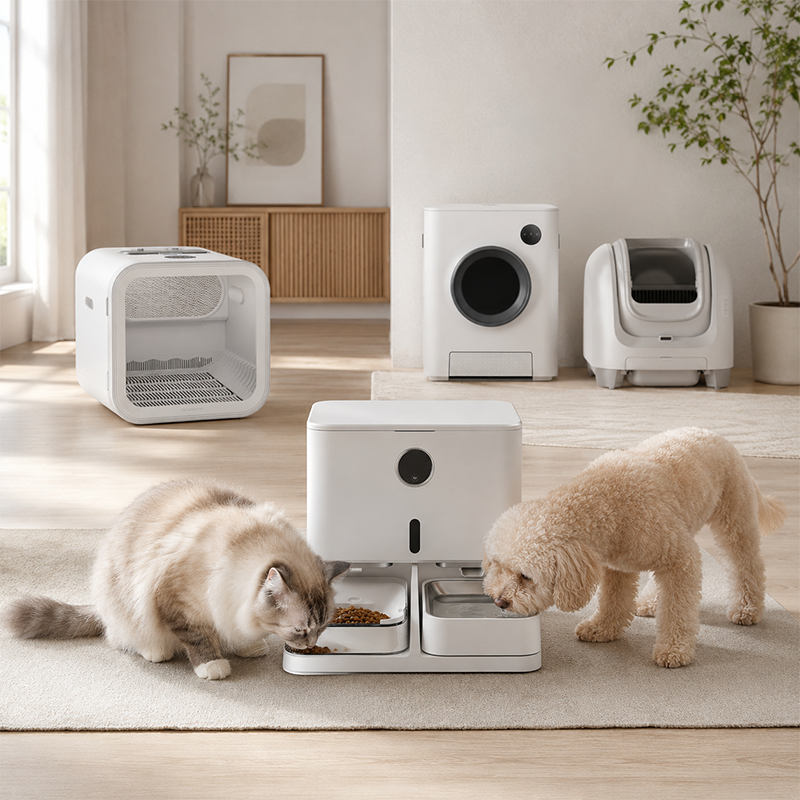
For multi-pet homes, capacity and feeding consistency become even more important. If two pets share one device, the food container should support daily use without frequent refilling. However, buyers should also consider whether pets compete for food. In some cases, households may need more than one feeder or a feeding area designed to separate pets.
Product design also affects purchasing decisions. A smart feeder used in the living room or kitchen should look clean and modern. Materials, surface finish, noise level, and device size can all influence how users feel about the product after installation.
For buyers building a full smart pet product line, it is also useful to connect the feeder with other smart pet care devices, such as water fountains, grooming devices, or monitoring products. A complete product category can support stronger retail presentation and better cross-selling opportunities.
In the smart pet care market, low price alone is not enough to build long-term trust. Pet owners care about product safety because the device directly contacts pet food and water. Brand buyers and distributors should pay close attention to material quality, electrical safety, production control, and product testing.
Before placing an order, buyers should ask several practical questions:
Does the product use pet-safe materials in food-contact areas?
Is the feeding structure designed to reduce food blockage?
Is the device easy for users to clean and maintain?
Can the supplier support stable production quality for repeat orders?
Are the product functions tested before shipment?
Is there room for OEM or ODM customization?
These details can affect product reviews, return rates, and brand reputation. A smart feeder may be sold online, in pet stores, through distributors, or as part of a smart home product portfolio. In all of these channels, reliability is a major factor in repeat sales.
For ODM buyers, quality is not only about the finished device. It also includes engineering support, mold development, electronic control, packaging, documentation, and after-sales communication. Choosing a capable supplier can reduce development risks and help brands launch products more efficiently.
For companies planning to develop or source smart pet care products, supplier capability is just as important as product features. PinDuan provides a practical foundation for brands that need smart device development, production support, and ODM customization.
Guangdong PinDuan Intelligent Technology Development Co., Ltd. is a high-tech enterprise integrating R&D, production, and sales. The company is dedicated to providing ODM customized services for customers in different application fields and has become a strategic partner of many brands, with products sold to Japan, South Korea, Europe, and America.
This background is valuable for smart pet feeder projects because the product involves multiple areas: structure design, app-based control, food and water contact safety, user interaction, production consistency, and market-ready packaging. A supplier with R&D and manufacturing capability can help buyers move from product idea to mass production more smoothly.
For brands, importers, and distributors, working with an ODM supplier can also support differentiation. Instead of selling a generic product, buyers can discuss appearance design, functional configuration, branding, packaging, and market positioning based on their target customers.
Choosing a smart feeder for cats and dogs should not be based only on design or cost. A good product should offer stable feeding, convenient app control, easy cleaning, safe materials, suitable capacity, and reliable daily performance. For end users, these details create a better pet care experience. For business buyers, they help reduce complaints and improve long-term product competitiveness.
If you are looking for smart pet feeders for your product line, retail channel, or ODM project, PinDuan can support smart pet care device development with R&D, production, and customization capabilities. To discuss product requirements, customization options, or cooperation details, you can contact us for more information.
 English
 日本語
日本語 한국어
한국어 français
 Deutsch
 Español
 русский
 português