A well-designed smart cat litter box combines three things that matter most in daily use: reliable safety sensing, efficient waste separation, and a structure that makes odor and cleaning easier to manage. Automation reduces repetitive scooping, but the real value comes from how safely the machine detects a cat, how effectively it handles waste, and how easy it is to keep critical parts clean.
For cat owners and pet product buyers comparing a smart automatic cat litter box, looking beyond the word “automatic” is important. Sensor configuration, entrance design, waste capacity, leak prevention, removable components, and smart controls can all affect the long-term user experience.
Smart litter box sensors help determine when a cat enters, remains inside, or approaches the machine. The cleaning mechanism should only operate when conditions are safe.
The PinDuan P7 Pro, for example, uses multiple layers of detection and protection rather than relying on a single sensor. Its system includes four weight sensors, one proximity sensor, an anti-pinch photoelectric sensor, four Hall sensors, reverse-rotation protection, and dual-motor protection. The entrance also remains fully open during operation.
This layered approach matters because different sensors perform different functions:
Weight sensors help detect physical load and cat presence.
Proximity sensing helps identify when a cat approaches the machine.
Photoelectric anti-pinch detection adds protection around moving components.
Hall sensors help monitor the position and operation of internal components.
Motor protection can stop operation if an obstruction occurs.
They can be safe when the product is engineered with redundant detection, obstruction protection, sufficient interior space, and a cleaning cycle designed around cat presence.
Consumers should therefore evaluate the complete safety architecture rather than simply checking whether a product “has sensors.” Multiple forms of detection provide a more comprehensive approach to automated operation.
Sensor cleanliness also matters. The Magic Cube product guidance notes that litter or debris obstructing sensors may affect their operation and recommends gently cleaning them with a dry cloth when necessary.
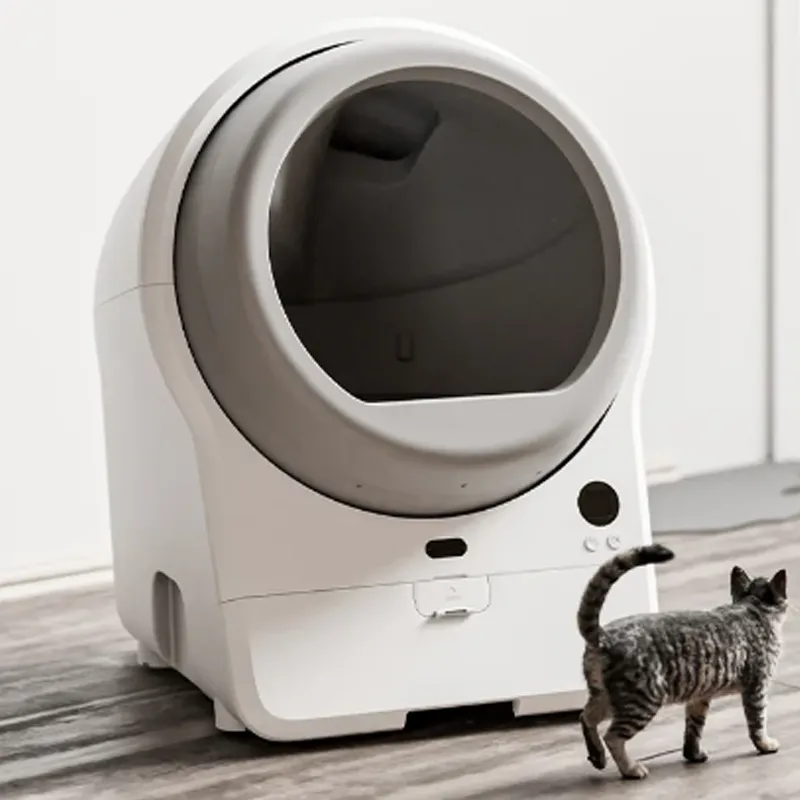
Automatic cleaning is most useful when the physical structure is designed for both everyday waste handling and periodic manual cleaning.
After a cat uses the litter box, an automated system separates waste from reusable litter and moves the waste toward a dedicated collection area. This reduces the amount of time waste remains mixed with clean litter.
Capacity and internal layout are also important. The P7 Pro features an 86L inner cabin and a 12L waste compartment. Its raised waste-compartment design helps distribute clumps instead of allowing them to accumulate in one location. The product is designed for cats weighing up to 10 kg, while the large entrance gives cats more room to turn comfortably.
Just as importantly, automatic does not mean permanently hands-off.
The P7 Pro uses a removable inner bucket: users can lift the top cover, remove the bucket, and access a large opening for easier rinsing. Its high-performance mat and silicone-sealed connection are also designed to reduce sticking, urine leakage, and litter-related mess around the internal structure.
These details can make a major difference over the product lifecycle. A sophisticated cleaning cycle has limited value if users struggle to reach surfaces where residue eventually accumulates.
Effective litter box odor management starts with reducing the time waste remains exposed to clean litter and surrounding air.
An automatic cleaning cycle can move clumped waste into a separate collection area soon after use. From there, odor performance depends on factors such as waste-compartment design, residue buildup, litter condition, leakage prevention, and how regularly the collection area is emptied.
For that reason, buyers should consider odor control as a system rather than a single feature.
Three design factors deserve particular attention:
Timely waste separation: Removing clumps from usable litter helps prevent waste from remaining exposed unnecessarily.
Leak-resistant construction: Urine or wet litter trapped in seams can become a persistent source of odor.
Accessible cleaning surfaces: Removable or washable components make it easier to remove residue before it builds up.
The Magic Cube smart cat litter box is specifically positioned to address common household issues including frequent waste cleaning and noticeable odor. Its troubleshooting guidance also recommends checking hidden areas for stuck waste when odor persists.
No litter box should be treated as completely maintenance-free or odor-proof. Automation can significantly improve waste management, but litter condition, the number of cats, waste-bin status, room ventilation, and cleaning habits still influence the result.
For the best experience, owners should treat automatic waste removal and periodic manual cleaning as complementary parts of the same hygiene routine.
Good cat litter box maintenance focuses on a few high-impact areas instead of unnecessary daily disassembly.
A practical routine includes:
Emptying the waste compartment before it becomes overly full.
Checking the litter level and topping it up when required.
Removing loose litter or debris around sensors.
Inspecting mats, seals, entrances, and waste paths for stuck residue.
Wiping exterior surfaces regularly.
Periodically removing washable components for a more thorough clean.
Checking that moving components operate normally before restarting the unit.
How frequently deeper cleaning is needed depends on the number of cats, usage frequency, litter type, and the individual home environment. Multi-cat households generally need more frequent inspection than single-cat households.
Smart functions can also reduce guesswork. The P7 Pro supports Wi-Fi connectivity and records toilet-use data in real time through its app. Functions including scheduled cleaning and assisted covering can also be controlled from a phone.
However, app connectivity should complement physical maintenance rather than replace it. Clean sensors and unobstructed moving parts remain essential for dependable operation.
Sensors detect conditions related to cat presence and machine status. After the cat has left and the required safety conditions are met, the system can perform its programmed cleaning cycle. Sensor configuration varies by product, so buyers should check what detection and protection technologies are actually included.
Yes. Loose litter, dust, or other debris around sensing areas may interfere with normal detection. Sensor areas should therefore be inspected and cleaned according to the manufacturer's instructions. PinDuan's Magic Cube guidance specifically recommends removing obstruction and gently cleaning sensors with a dry cloth if sensor problems occur.
Waste should be removed as needed before the collection compartment becomes full, while deeper cleaning should be based on actual usage, the number of cats, litter type, and visible residue. Even self-cleaning models benefit from routine sensor inspection and periodic cleaning of removable components.
Prioritize safety sensors, obstruction protection, an appropriately sized entrance and cabin, waste capacity, leak-resistant construction, easy disassembly, cleaning accessibility, and reliable smart controls.
For brands and distributors, manufacturing capability should also be part of the evaluation because automatic litter boxes combine structural design, sensors, motors, control systems, assembly, and safety logic. PinDuan supports ODM development, production, and customization for smart pet care products.
A useful smart litter box is not defined by automation alone. The strongest designs combine reliable sensing, controlled movement, effective waste separation, leak-resistant construction, accessible cleaning components, and practical smart controls.
The P7 Pro illustrates this integrated approach with multiple sensor layers, an open entrance during operation, an 86L cabin, a 12L waste compartment, leak-resistant components, removable cleaning parts, and app-based usage monitoring and scheduled cleaning.
For pet care brands, distributors, and private-label projects, product engineering is only one part of the decision. Pinduan is a high-tech enterprise integrating R&D, production, and sales, providing ODM customized services for customers in different application fields. Its products are supplied to markets including Japan, South Korea, Europe, and America.
If you are developing or sourcing a smart cat litter box and need support with product development, manufacturing, or ODM customization, Contact Us to discuss your project requirements.
 English
 日本語
日本語 한국어
한국어 français
 Deutsch
 Español
 русский
 português